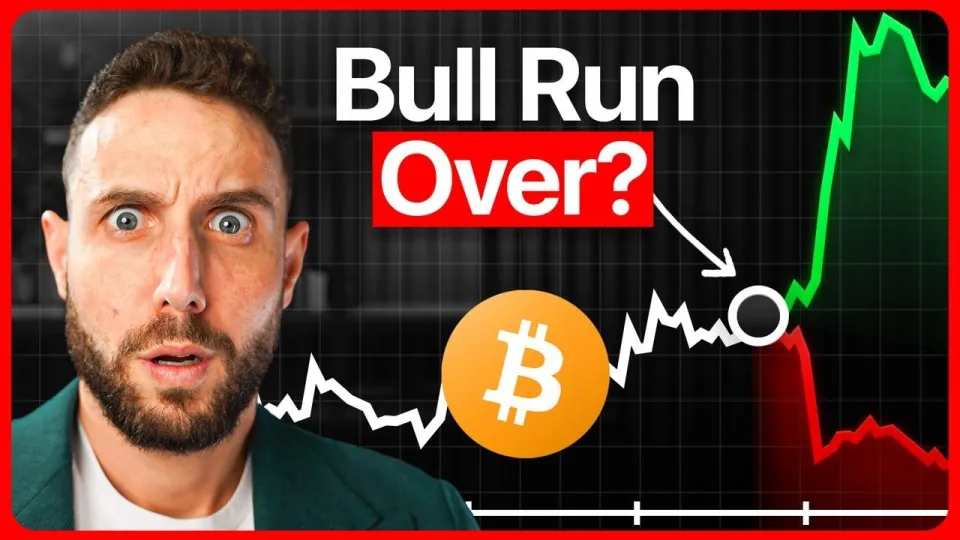
Bitcoin weekly close versus a breakdown below support as the deciding signal for the crypto bull run
You can order the same kind of articles for your own video to boost it on YouTube and Google. Just message the Telegram bot @sat_sit_bot. It writes articles around your video, embeds the video and publishes them on popular niche websites (no ads). Try it free: 50 articles on us.
Bitcoin's next weekly close is the single most important signal for the crypto bull run right now: if BTC holds its support zone into the weekly candle close, the higher-timeframe uptrend stays valid and altcoins remain buyable; if the close comes in below that zone, the bull structure is broken and the correct response is patience, not catching a falling knife. The setup is binary, and the trigger is a single candle. Traders who want to take a position on the outcome rather than the spot price can claim the $50 Kalshi bonus with a $50 trade and get paid on the resolution instead of the wick.
Why the weekly close matters more than any intraday move
A weekly close is the price the market accepts after five days of fighting, and it is the level that higher-timeframe trend models actually read. Intraday wicks below support are noise: liquidity sits under obvious lows, and market makers routinely sweep those levels before reversing. What changes the structure is where the candle finishes.
That is why the current setup is described as a two-day window. Until the weekly candle prints, both scenarios are live, and every intraday bounce or flush is a coin flip. Once the candle closes, one side of the trade is dead and the other becomes a plan with defined risk.
A practical checklist for the close:
- Note the exact support zone on the weekly chart before the candle finishes, not after.
- Treat any move inside the zone as undecided; do not add size on a Tuesday wick.
- After the close, mark the candle low and high as the new reference points for the following week.
- Only then decide whether to add risk in BTC and alts or to stand aside.
What a hold above support means for Bitcoin and altcoins
If Bitcoin closes the week above its support zone, the bull case stays intact and the next objective is a reclaim of the range highs, with a run back toward six-figure prices as the base case rather than a fantasy. The logic is mechanical: a defended higher low keeps the sequence of higher highs and higher lows alive, and that sequence is what trend followers and systematic funds use to justify exposure.
For altcoins the implication is sequencing, not equal treatment. Altcoins are higher beta, so they only get bought after BTC confirms. In practice that means:
- BTC leads the bounce and reclaims its level first.
- Large-cap alts with clean higher-timeframe structure follow.
- Small caps and narrative coins come last, and only if BTC dominance stops rising.
A common mistake in this phase is buying a beaten-down alt because it is down a lot. Being down a lot is not a signal; Bitcoin holding support is the signal, and the alt is the expression of it.
What a weekly close below support would break
A weekly close below the support zone would invalidate the bull structure and turn the market into a waiting game, with lower prices as the more likely path than an immediate V-shaped recovery. In that scenario the plan is not to average down aggressively but to define where the next real demand zone sits and let price come to it.
This is where most of the frustration in the market comes from. Traders who wanted a cheaper entry get one only if the bull case fails, and a failed bull case lowers the probability of the large gains they were positioning for in the first place. Wanting a deep discount and wanting a confirmed uptrend are contradictory wishes, and the market rarely grants both.
The bear-case checklist:
- Weekly candle closes below the support zone with no immediate reclaim.
- The prior weekly low is taken out on the following candle.
- Altcoins make lower lows while BTC dominance climbs.
- Only then does a deeper retracement toward the next demand zone become the working plan.
Bitcoin dominance and the altcoin rotation
Bitcoin dominance is the tell for whether an altcoin bid is real or just a bounce, and in a defensive tape dominance tends to rise while most alts print lower lows. That pattern is exactly what a breakdown scenario produces: capital leaves the long tail of the market and parks in BTC, so alt bags bleed even while Bitcoin looks stable.
A simple way to read it:
- Dominance rising with BTC flat or up: alts are a sell into strength, not a buy.
- Dominance falling with BTC up: rotation is live and quality alts can run.
- Dominance spiking with BTC down: risk-off, and cash is a position.
This is also why shorting individual alts into a support test is a poor risk-reward. If BTC holds, the short gets squeezed by beta alone, regardless of how weak the alt's own chart looks.
How traders are actually positioning around the decision
The cleanest way to trade a binary event is to size for being wrong, not to predict the candle. Concretely, that means keeping position size small enough that a breakdown close does not force a panic exit, and keeping dry powder for the scenario where support holds and the trend resumes.
Three practical rules used by traders in this kind of setup:
- Do not open fresh altcoin longs before the weekly close; the outcome is unknown and the beta cuts both ways.
- If already long, define the invalidation level in advance and honor it on the close, not on the wick.
- Keep a watchlist ranked by structure quality so that entries can be taken within minutes of a confirmed hold.
Prediction markets are an alternative for traders who want exposure to the outcome without the leverage risk of a spot position: a binary contract pays on resolution, so a wrong call costs the stake and nothing more.
Questions traders keep asking about this setup
Many of the doubts around this kind of call are about timing rather than direction. A weekly close is a fixed deadline, but the price path to it is not, and a market can spend four days drifting and then move 5% in the final hours. That is normal, and it is why the close, not the journey, is the trigger.
The second recurring doubt is whether a short bear phase would be bullish or bearish for what comes next. A very short, shallow correction often produces a weaker and more fragile rally, because it does not reset positioning or flush leverage properly. A deeper reset hurts in the moment but tends to build a stronger base. Neither outcome is guaranteed, which is why the weekly close is the only input that matters for the next decision.
All links from the breakdown
- Kalshi, $50 bonus on a $50 trade: https://kalshi.com/p/elliotrades
- Liquid, 10% off trading fees: https://liquid.trade/r/ellio
- WEEX, deposit $100 and unlock up to $4,000 in bonuses: https://www.weex.com/events/promo/elliotrades-deposit-trade?vipCode=wubo&qrType=activity
- fomo, public trading journey: https://fomo.family/r/elliotrades
- X profile: https://x.com/elliotrades
Conclusion
Bitcoin's weekly close is the decision point: a hold keeps the crypto bull run alive and puts six-figure prices back in play, while a close below support breaks the structure and makes patience the better trade. The plan is simple to state and hard to execute, because it requires doing nothing until the candle finishes and then acting without hesitation. Position sizing, a pre-written invalidation level and a ranked altcoin watchlist are the three tools that make that possible. The breakdown above comes from the EllioTrades channel, which framed the setup as a two-day window for Bitcoin to save the bull run. If you want to trade the resolution rather than the wick, get the $50 Kalshi bonus on your first $50 trade.
Key takeaways
- EllioTrades frames the coming weekly candle close as the trigger that decides whether the crypto bull run continues or the market shifts bearish.
- A weekly close that holds support keeps the higher-timeframe uptrend intact and opens the door to a retest of six-figure BTC prices.
- A weekly close below support invalidates the bull structure and shifts the plan toward waiting for lower prices instead of buying the dip immediately.
- The trading plan covers BTC first and altcoins second: alts are only bought after Bitcoin confirms support on the weekly timeframe.
- Kalshi offers a $50 bonus for a $50 trade via the EllioTrades referral link, giving traders a way to express a view on the outcome.
Questions & answers
What exactly counts as a weekly close for Bitcoin?
It is the price at the moment the weekly candle finishes, typically at the end of the week on the exchange's chart timezone. A wick below support during the week does not count; only the closing price does. That is why the setup is treated as a fixed deadline rather than a continuous signal.
Should I buy altcoins before the weekly close if Bitcoin is holding support intraday?
No. Intraday strength inside the support zone is undecided price action, and altcoins carry higher beta in both directions. The sequence that has historically worked is BTC confirming the weekly hold first, then large caps, then smaller narrative coins. Buying alts early simply adds risk to an unresolved event.
Does a short, shallow Bitcoin correction mean the next rally will be stronger?
Usually the opposite. A quick dip that does not reset leverage or flush weak hands tends to leave the market fragile, and the following rally is often narrower. A deeper correction is painful but builds a sturdier base. Either way, the weekly close is the input that decides which scenario is live.
Is shorting a weak altcoin a good hedge if Bitcoin breaks down?
It is a crowded and dangerous trade. If Bitcoin holds support, altcoin beta squeezes shorts quickly even when the individual chart looks weak. A cleaner expression of a bearish view is smaller spot exposure, cash, or a defined-risk position on the BTC outcome itself rather than a leveraged short on an illiquid alt.
Source: Bitcoin Has 2 DAYS to Save the Crypto Bull Run · Markdown version